Who Actually Controls the Quality?
Buyers sourcing from a trading company ask a fair question, and it deserves a direct answer: CV Agro Inti Raya does not operate its own crushing plant.
What we operate is a working relationship with the mills that do — and an inspection process that sits between those mills and your vessel. The sections below set out exactly where that process starts and who signs off on each step.
Analysis by SUCOFINDO and SGS
Cargo analysis is carried out by independent inspection agencies — SUCOFINDO and SGS — not by us, and not by the producing mill. Both are internationally recognised, and their findings are issued directly rather than passed through us.
For a buyer who has not traded with us before, this is the part that matters: the number you rely on does not originate from the party selling you the cargo.
- Analysis by internationally recognised third parties
- Findings issued directly, not relayed through the seller
- Applied uniformly regardless of which mill supplied the cargo
Why We Work with Several Mills
Relying on a single plant leaves a buyer exposed to that plant's downtime, maintenance schedule, and seasonal output.
Direct Mill Relationships
Supply is drawn from Indonesian kernel crushing plants we deal with directly, and our team visits these facilities.
Coverage Across Plants
Volume can be covered from more than one source when a single plant is down for maintenance.
One Inspected Standard
Quality is held to the same inspected standard regardless of which plant supplied the cargo.
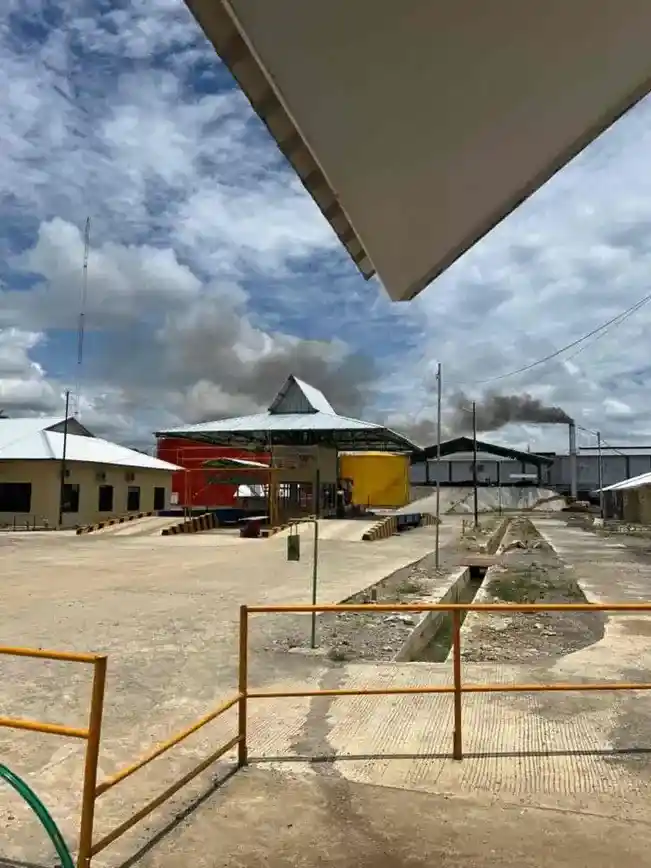
Origin Traced to Plantation Plot Level
Origin can be traced beyond the mill, down to the plantation plots that supplied it. Geographic coordinates for those plots can be provided on request.
Under the EU Deforestation Regulation, which applies to large EU operators from 30 December 2026, importers must show that palm kernel expeller was not produced on land deforested after 31 December 2020. Palm kernel oilcake is covered by the regulation under HS code 2306.60. The obligation to file the declaration sits with the importer — which is why the plot data has to come from origin, and why we prepare it rather than leave it to be requested late.
What Buyers Verify Before Contracting
You do not own a mill — how can you assure quality?
By not being the party that measures it. Cargo analysis is performed by SUCOFINDO and SGS, both internationally recognised, and their findings are issued directly. Our role is to select the mills, coordinate the inspection, and refuse cargo that does not meet the contracted parameters — not to certify our own material.
Can you provide plantation coordinates for EUDR compliance?
Yes, on request. Origin can be traced beyond the mill to the plantation plots that supplied it, and geographic coordinates for those plots can be provided. Note that the obligation to file the EUDR declaration sits with the importer, so it is worth raising this at the enquiry stage rather than after shipment.
What happens if the inspected result differs from the contracted specification?
That is precisely why the inspection sits before loading rather than after. Raise your tolerance thresholds during contracting so that the handling of an out-of-range result is agreed in writing beforehand, not negotiated once the cargo is on the water.
Which mill will supply my cargo?
It depends on plant output and loading schedule in your shipment window. We work across several Indonesian crushing plants for exactly this reason. Whichever supplies the cargo, the same inspection standard applies.
Ask for the Assurance Documents
Tell us which certificates and traceability data your import procedure requires, and we will confirm what can be issued for your shipment.